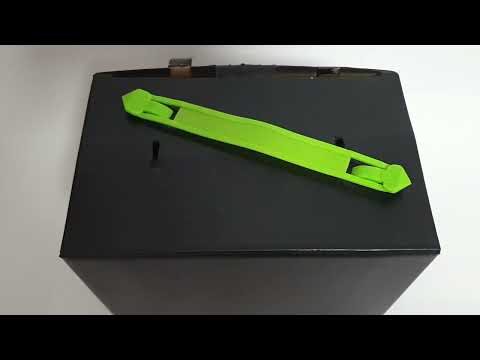
Cardboard Box Handles That Make Carrying Heavy Loads So Much Easier
A cardboard box handle is a simple cut-out or attached strip that transforms a bulky container into a manageable carry. By providing a secure grip on the side or top, it drastically reduces strain on your hands and arms, allowing you to move heavy loads with one smooth motion. To use it, just slide your fingers through the opening or grasp the reinforced plastic loop—then lift with confidence, knowing the box’s weight is evenly distributed. This small addition turns awkward lugging into effortless transport, making every delivery or move faster and safer.
Why a Simple Cutout Matters for Packaging
A simple cutout transforms a plain cardboard box into something you can actually carry. It creates an instant handle without needing tape or extra parts, making the box easier to grip and move. This small design change prevents fumbling and reduces the risk of dropping heavy items. The cutout also maintains the box’s structural integrity, ensuring the weight is distributed along stronger panels rather than the lid. It’s the difference between wrestling with a flimsy flap and effortlessly balancing your load. For anyone packing or unpacking, that one cutout means faster, safer handling and less frustration.
Ergonomics and the Science Behind a Comfortable Grip
Ergonomics dictates that a cardboard box handle’s cutout must align with the hand’s natural biomechanics to reduce strain. The science behind a comfortable grip involves distributing pressure across the palm’s fleshy pads, avoiding concentrated force on sensitive median nerves. An optimal cutout radius of 20–25 mm allows fingers to curl without hyperextension, leveraging friction from skin ridges rather than requiring clamping force. Biomechanical load distribution prevents fatigue by engaging the forearm’s flexor muscles passively. Q: Why does a cutout’s edge curvature influence grip comfort? A: A sharp edge creates high pressure points that compress capillaries, while a rounded edge (≥3 mm radius) spreads load, maintaining blood flow and delaying muscle exhaustion during transport.
Reducing Workplace Injuries Through Better Hand Access
A well-designed cardboard box handle provides direct hand access that prevents awkward reaching into deep containers. This access reduces the need for employees to wedge fingers under heavy boxes, carton box plastic handle which commonly causes cuts, sprains, and repetitive strain injuries. By allowing a natural grip without twisting wrists or over-extending fingers, the handle eliminates pinch points that lead to lacerations. Smoother entry also decreases the chance of impact injuries from sharp edges during retrieval. Consequently, a simple cutout transforms each lift from a risky maneuver into a controlled, safer action.
Better hand access through a cutout handle directly prevents cuts, sprains, and impact injuries by allowing natural, controlled lifting without awkward finger positioning.
Key Design Variations for Moving Containers
The key design variation for moving containers revolves around the handle’s integration with the box structure. Cut-out handles are the most common, relying on a die-cut slot in the cardboard; their effectiveness hinges on the box’s wall thickness and the user’s grip strength, as thin material can dig into fingers when the load is heavy. A clear insight emerges here:
the handle’s comfort directly tracks the container’s weight, so a reinforced, rounded cut-out is vital for any box expected to hold books or kitchenware.
Another approach adds a plastic or fabric strap, riveted or glued to the side panel, shifting the stress from the cardboard edge to the attachment point. This variation suits moving containers for awkward items like lamps, where a solid grip prevents the box from tearing mid-carry—a detail every mover learns the hard way during a stairwell exit.
Die-Cut Perforations vs. Reinforced Plastic Inserts
Die-cut perforations offer an integrated handle by stamping a cut-out pattern directly into the cardboard, creating a finger-hold that is cheap and space-efficient but limited by the board’s tear strength, often failing under heavy loads. In contrast, reinforced plastic inserts provide a separate, molded clasp or strap that is anchored through the box wall, distributing weight across a larger area. This reinforcement significantly boosts load capacity and prevents the handle from ripping out, making it suitable for heavier items. Die-cut perforations vs. reinforced plastic inserts thus presents a trade-off between minimal cost and packaging simplicity versus superior durability and carrying comfort.
Die-cut perforations are economical and integral but weaker; reinforced plastic inserts add cost and material but provide stronger, more reliable load-bearing for moving containers.
Flush Mounted vs. Protruding Carry Solutions
When choosing a cardboard box handle, the carry solution’s mounting style dictates user experience. Flush mounted handles lie flat against the box face, offering a streamlined profile that prevents snagging during stacking and automated transport. For applications where clearance is tight or boxes are densely palletized, this low-profile design is optimal. Conversely, protruding handles extend outward, providing an easier, more immediate grip for heavy loads by allowing full hand clearance. However, they risk catching on shelving or adjacent boxes. The selection sequence is straightforward:
Assess stacking density and automation requirements to prioritize flush mounts.
If the box exceeds 15 kg, opt for protruding handles to reduce finger strain.
Single vs. Double Grip Openings for Heavy Loads
For heavy loads, the choice between single and double grip openings can make or break the move. A single opening works best for balanced, dense items where one hand easily supports the center of gravity. Double grip openings, however, excel for awkward or extra-heavy boxes—letting you lift with both hands and distribute weight for safer handling. This dual-handle approach reduces strain on one arm and improves control on uneven terrain.
Single grip: best for balanced, moderate weight. Double grip: essential for heavy or off-center loads, offering better stability and shared lifting effort.
Materials and Durability Considerations
The material choice for a cardboard box handle directly impacts its durability. Common options include polypropylene, which offers good tensile strength and resistance to tearing under moderate loads. For heavier boxes, reinforced polypropylene or nylon webbing handles provide superior weight capacity, though they add cost. The handle’s attachment method is critical; hot-melt adhesive bonds must be strong enough to withstand shear force without delaminating the cardboard. Die-cut handles, integrated into the box material, rely entirely on the corrugated board’s thickness and flute direction. A single-wall board handle will fail quicker under moisture stress or repeated lifting than a double-wall variant. The surrounding cardboard must also be considered; even a robust handle will fail if the box panel itself tears. Therefore, durability considerations must balance handle material, adhesive strength, and substrate quality for the intended payload.
How Corrugated Thickness Affects Tear Resistance
In corrugated cardboard, thickness directly dictates the handle’s tear resistance by increasing the material’s structural depth. A thicker flute—such as BC or EB—provides a longer lever arm for stress distribution, preventing the handle cutout from propagating tears under load. Conversely, thin single-wall board concentrates tensile forces at the punch-out edges, causing rapid failure. Flute depth determines tear propagation thresholds, as the paper liners must separate before tearing. For practical selection:
Heavier loads require double-wall thickness (BC flute) to absorb shear forces along the handle’s perimeter.
Medium loads pair with B-flute to balance rigidity and tear initiation resistance.
Thin E-flute fails quickly under lifting stress, limited to light items under 5 kg.
Laminated Layers and Waterproof Coatings
For cardboard box handles, laminated layers and waterproof coatings are critical for structural integrity. Lamination fuses multiple paperboard plies around the handle cutout, distributing tensile stress from lifting to prevent tear-out. A waterproof coating, such as a polyethylene or wax emulsion, seals the exposed fiber edges at the handle slot, blocking moisture wicking that would otherwise weaken the bond. Without this coating, even a brief exposure to condensation can cause the handle’s laminated plies to delaminate under load. The coating also creates a slick surface, reducing friction and abrasion when the handle is gripped.
Aspect
Laminated Layers
Waterproof Coating
Primary function
Adds tear resistance and distributes load
Blocks moisture and reduces fiber wicking
Failure mode
Delamination under cyclic stress
Pinhole cracking after flexing
Eco-Friendly Options: Biodegradable or Recycled Components
For the handle, you can choose biodegradable or recycled components that keep the box fully eco-friendly. Look for handles made from jute, hemp, or recycled paper pulp—these break down naturally without harming the soil. A handle crafted from post-consumer cardboard waste still offers surprising tensile strength when layered correctly. Avoid plastic rivets by opting for plant-based glues or simple slot-and-tab designs that eliminate extra materials entirely. Your box stays compostable, and the handle won’t linger in a landfill.
Practical Benefits for E-Commerce and Shipping
For e-commerce and shipping, a cardboard box handle delivers serious practical wins. It drastically cuts down on awkward fumbling, making it easier for warehouse staff to grab heavy or bulky parcels without dropping them. This reduces package damage and speeds up the loading process. Customers also benefit from the handle, as it simplifies carrying deliveries to their front door. It’s a small addition that can actually lower your return rates by preventing common handling mishaps. After unboxing, the handle lets them easily move the empty box to storage, which is a big convenience for heavy paper recycling or reuse. Overall, it makes the entire shipping experience less of a chore.
Reducing Returns from Damaged Packaging
Integrating a cardboard box handle directly into packaging drastically reduces returns caused by damaged boxes during transit. When shoppers receive a box with a tear or crushed corner, they often reject it immediately. By eliminating the need for lifting from edges or pressure on seams, the handle preserves the package’s structural integrity. This means fewer claims about compromised contents. Furthermore, the handle prevents strap or tape-related failures that frequently lead to punctures. Fewer damaged shipments translate directly into lower return rates, saving you money on replacements, shipping labels, and restocking fees. It is a straightforward upgrade that keeps your product secure from the first grip to the final delivery.
Enhancing Customer Unboxing Experience
Integrating a user-friendly unboxing design into packaging begins with the handle’s placement, which must align with the product’s center of gravity to prevent tilting and frustration. A die-cut handle with a reinforced edge reduces tear risk and allows a single hand to stabilize the box while the other removes tape or branding inserts. The sequence is simple:
Cut a strap-style handle into the top flaps for a balanced lift.
Apply a smooth, rounded die-cut on the side panels for the primary grip hold.
Position the handle within the top third of the box’s height to maintain stability during one-handed carrying.
This eliminates awkward balancing and preserves the pristine condition of interior layers, directly improving satisfaction during first contact.
Stacking Stability and Load-Bearing Limits
A cardboard box handle’s integration directly affects stacking stability under load. A poorly designed handle, like a die-cut opening, creates a structural weak point that compromises the box’s ability to bear weight from above, leading to collapse during palletizing. In contrast, a recessed handle that reinforces the panel—such as an embedded plastic or taped version—maintains the box’s compressive strength. This ensures vertical loads are distributed evenly across the sidewalls, preventing buckling. For e-commerce, this means taller, denser stacks are possible without crushing lower boxes, maximizing warehouse space while protecting goods from compression damage.
Common Mistakes When Adding Handles to Cartons
You measure twice, cut once, yet the handle still rips out on the first lift. The most common mistake is cutting a cardboard box handle perpendicular to the flutes, making the structure weak. Another error is slicing the opening too wide, leaving no edge for your fingers to grip. People forget that carton weight dictates handle placement—cutting one near the top of a heavy box causes the cardboard to bow. Never align the handle with the existing manufacturer’s joint, as that seam is already a stress point. A proper cardboard box handle must be centered between two sturdy side panels.
Improper Placement Leading to Sides Ripping
Cutting a handle too close to the carton’s side edge creates a narrow, weak flap that cannot bear the load. This insufficient edge distance for handle placement causes the side panel to tear from the cutout outward under strain. When the die-cut slot intersects the vertical score line, the box’s structural integrity is compromised, leading to immediate ripping upon lifting. A handle must be positioned at least 1.5 inches from the nearest edge and aligned with the center of the panel to distribute stress evenly. Off-center cuts funnel all weight into one side, inevitably causing failure at the weakest point.
Neglecting Weight Distribution for Large Parcels
Neglecting weight distribution for large parcels when adding handles creates a severe risk of the carton tearing or tilting. If the handle is centered but the contents are bottom-heavy, the top handle cut-out stress point bears the entire load, ripping easily. Conversely, a handle placed high on a package where the weight sits low forces a pendulum-like swing, damaging the box structure. Always align the handle’s attachment point with the parcel’s overall center of gravity, not its physical midpoint.
Failing to Account for Glove or Finger Clearance
Failing to account for adequate finger clearance renders a cardboard box handle unusable. If the cutout does not exceed the user’s glove thickness (e.g., 2–5 mm for work gloves), fingers become pinched or cannot fully curl through, reducing grip strength. Standard die-cut handle slots often assume bare hands, neglecting bulky winter or protective gloves. This oversight forces users to hook handles awkwardly or abandon them entirely. Always verify the handle opening’s depth and width allow at least 15 mm of knuckle clearance when wearing the thickest intended glove. A simple test with actual gloves during prototyping prevents this failure.
Innovations Shaping the Future of Portable Packs
Future portable packs are rethinking the basic cardboard box handle by integrating flexible, die-cut straps that lock into the box’s structure, eliminating the need for tape or separate plastic components. These integrated handles are precision-scored to pop out, distributing weight across a wider surface area to prevent tearing. Innovators now test triangular cutouts that fit natural hand-grips for better leverage. Q: How do these innovations prevent box handles from ripping? A: By using engineered perforations and reinforced stress points that spread the load, turning the cardboard itself into a durable, reusable carrying yield. Expect handles that lay completely flat during shipping, then expand instantly for transport.
Foldable, Retractable Handles for Space Efficiency
Foldable and retractable handles eliminate the bulky protrusions of traditional fixed handles, allowing a cardboard box to sit flush against walls or nest tightly with other boxes. This design collapses entirely into a recessed slot, saving vertical and horizontal storage space without snagging on shelving. The mechanism, often a spring-loaded pull or a simple hinged flap, remains sturdy when deployed yet vanishes into the box profile when not in use. For movers and shippers, this transforms a standard container into a space-saving portable pack optimized for dense stacking.
Eliminates snagging hazards during transport and stacking
Reduces wasted gaps between stored boxes by over an inch per side
Maintains a flush exterior for uniform pallet or shelf loading
Integrates without weakening the box wall structure
Smart Tracking Tags Integrated into Carry Points
Integrating smart tracking tags directly into the carry points of a cardboard box handle transforms the handle into an asset management node. These tags, embedded within the structural cutout, allow users to locate a package via Bluetooth or UWB without accessing the box interior. The handle itself becomes a tracking-enabled carry point, emitting a signal that remains unobstructed during hand transport. This design eliminates the need for external tag pouches.
Q: Can the tag survive repeated handling? A: Yes, tags are sealed within the handle’s rigid cardboard layers, protecting them from compression and impact during normal carry and set-down motions.
Customizable Cut Patterns for Brand Personification
Customizable cut patterns for brand personification transform a mundane cardboard box handle into a silent brand ambassador. By laser-cutting a logo or mascot silhouette directly into the die-cut carry loop, the handle itself becomes a tactile advertisement without extra labels. This technique avoids adhesive waste, as the identity is etched into the structural integrity of the pack. A retailer can embed a geometric crown for luxury feel or a jagged edge for outdoor gear, ensuring the handle’s ergonomic shape simultaneously tells the brand story. The cut pattern never compromises grip strength; it merely reallocates negative space for visual impact.
What Exactly Is a Cardboard Box Handle and How Does It Work?
The Simple Mechanics Behind a Portable Grip for Corrugated Boxes
Different Styles: Cut-Outs, Attached Plastic Loops, and Adhesive Tabs
Why These Handles Are Not the Same as Simple Box Cutouts
Key Benefits You Get From Adding a Handle to Your Boxes
Easier Lifting and Carrying Heavy Loads Without Strain
Protecting Box Integrity and Reducing Tearing During Transport
Improving Safety by Eliminating Awkward Grips on Sharp Edges
How to Choose the Right Handle for Your Specific Box Type
Matching Handle Strength to Box Weight and Content Fragility
Selecting Between Self-Adhesive, Plastic, or Die-Cut Options
Determining If You Need Reinforced or Padded Grips for Frequent Use
Practical Tips for Installing and Using Box Carrying Aids
Correct Placement on the Box for Balanced Weight Distribution
Avoiding Common Mistakes Like Overloading or Poor Alignment
Guidelines for Using Handles on Double-Walled or Multi-Depth Boxes
Frequently Asked Questions About These Portable Grips
Can Handles Be Added to Boxes After They Are Packed?
Do Handles Work on All Corrugated Box Thicknesses?
What Is the Maximum Weight a Standard Handle Can Support?
Contentcurrent from your journalistsFind Your Bezzy Neighborhood The amount of people suffering from intellectual conditions provides risen notably usually. In the views out of confident mindset or holism, mental health try thus not only the absence of mental disease. A healthcare professional could help anyone having a mental health status […]
ContentIn news reports However, increasingly, benefits claim that less than cautious supervision, marijuana, psilocybin (mushrooms), MDMA (ecstasy) and ketamine – ingredients have a tendency to related to outdoor recreation – also provide healing professionals, even though they could also provide impairing outcomes. For the more than 30 instances, long-date 24june […]